
Approval Checklists: Structured, Consistent and Compliant Approvals
Marketing and creative teams work under pressure — multiple reviewers, tight deadlines, brand accuracy requirements and growing regulatory obligations. When reviews rely on memory or informal processes, critical checks are missed and assets move forward without the required approvals.
Admation’s Approval Checklists provide a structured, repeatable and compliance-ready process that ensures every requirement is met before work is signed off. They give teams clarity, consistency and control across every approval cycle, regardless of asset type, department or campaign volume.
This feature is essential for marketing operations teams, brand governance, creative agencies and organisations in regulated industries such as finance, insurance, healthcare and government.
What Problem Do Approval Checklists Solve?
Marketing, creative and compliance teams often manage large volumes of assets across multi-channel campaigns — each with specific legal, brand, technical and regulatory requirements. Without structured checklists, reviews become subjective, inconsistent and difficult to scale.
Approval Checklists solve these issues by ensuring reviewers follow a consistent, auditable process for every asset.
Without checklist-led approvals, teams face:
- Inconsistent review standards
Stakeholders apply different criteria, creating variable quality and unnecessary revision cycles. - Missed compliance requirements
Mandatory legal wording, disclaimers, claims verification or regulated statements are overlooked when reviews rely on memory. - Brand governance gaps
Incorrect logos, colours, mandatories, layouts or tone of voice slip through during fast-paced campaign work. - Subjective approval decisions
Without structured steps, reviewers approve work based on preference rather than defined rules. - Avoidable rework
When issues are missed early, assets require multiple revisions — slowing campaign delivery. - Scaling challenges
As asset volume increases, informal review processes collapse under complexity. - Limited audit evidence
Email approvals provide no reliable proof that required checks were completed — a major issue for regulated industries.
Admation’s Approval Checklists eliminate these risks by embedding a consistent, structured and fully traceable review framework into every approval.
What Are Admation’s Approval Checklists?
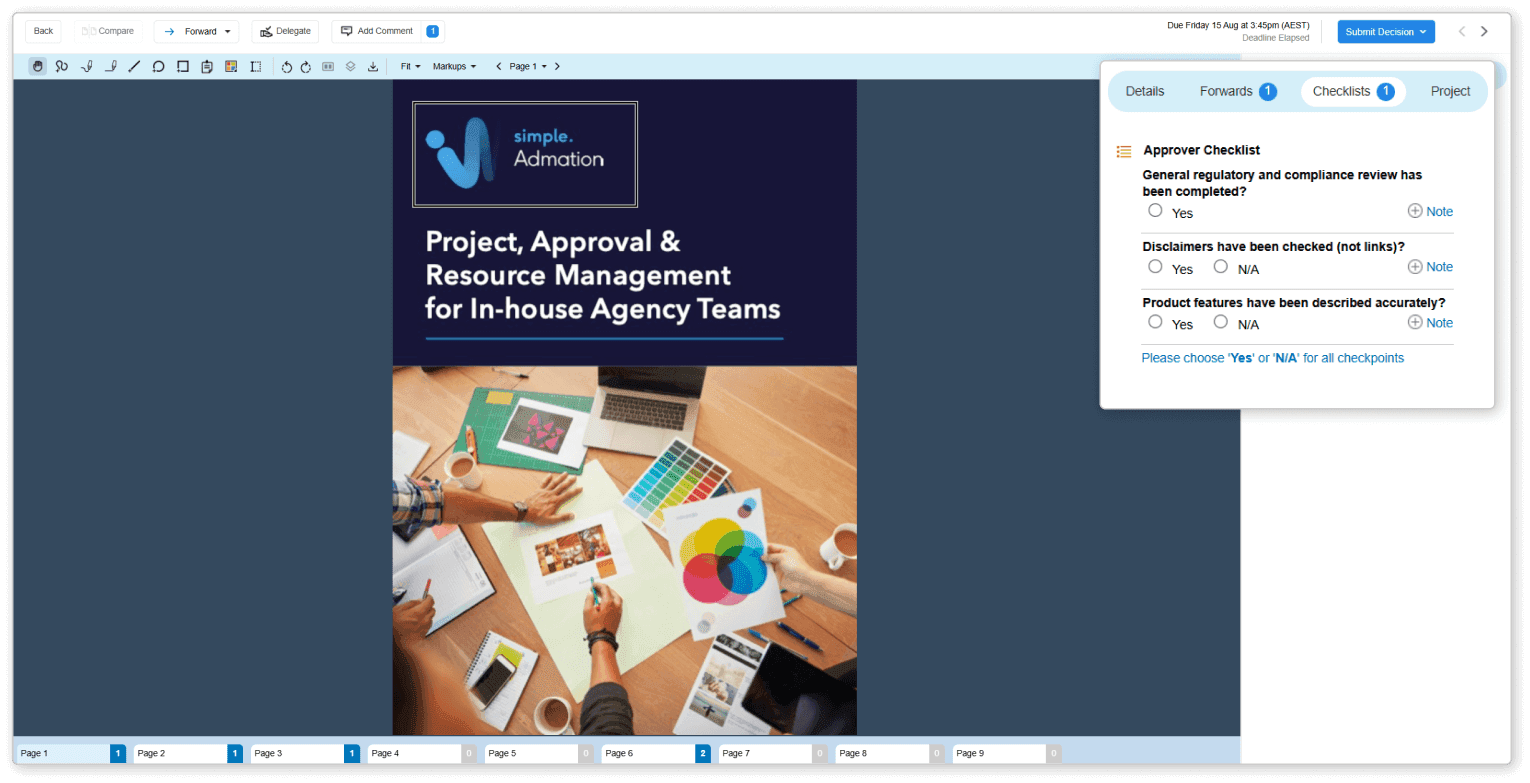
Approval Checklists are structured lists of required steps, confirmations and compliance checks that reviewers must complete before approving work. Each checklist can be customised for different job types, creative formats, departments or regulatory requirements.
In Admation, checklists are fully integrated into the approval workflow, guiding reviewers step-by-step and ensuring no detail is overlooked — even as teams grow or campaigns become more complex.
Key Features
Custom Checklists for Every Asset Type
Create tailored checklists for digital, print, social, email, video, product content, regulated material and department-specific needs.

Rules-Based Conditional Logic
Display checklist items based on asset type, user role or business unit — keeping reviews relevant and efficient.

Automatic or Manual Assignment
Auto-assign checklists based on project or deliverable type, or select templates manually for specialised work.

Mandatory Fields & Structured Reviewer Guidance
Reviewers cannot approve until mandatory questions are completed. Include instructions, examples or links for clarity.

Reviewer Alerts & Task Reminders
Automated reminders prompt reviewers to complete required steps and avoid bottlenecks.

Audit Trail Integration
All checklist responses are timestamped and saved alongside approvals for governance and regulatory review.

Checklist Version Control
Track how checklists evolve as compliance rules or brand requirements change.

Centralised Governance
Admins can update checklists at a global or account level to ensure compliance changes are applied immediately.

Exportable Reporting
Export checklist data to monitor quality trends, identify gaps and improve marketing operations processes.

Key Benefits
Stronger Compliance & Reduced Risk
Checklist-driven reviews ensure legal, brand and regulatory requirements cannot be skipped.
Faster Approvals & Fewer Revision Loops
Clear, structured guidance reduces ambiguity and cuts down unnecessary revisions.
Improved Accountability & Audit Readiness
Every response is recorded, providing a reliable compliance record for internal or external audits.
Scalable, Repeatable Review Processes
As creative output increases, checklists ensure consistent quality without additional admin burden.
Greater Brand Accuracy
Every asset meets brand standards for tone, mandatories, visual identity and claims before release.
Less Manual Coordination
Teams eliminate email-driven reviews, manual reminders and inconsistent stakeholder expectations.
How It Works
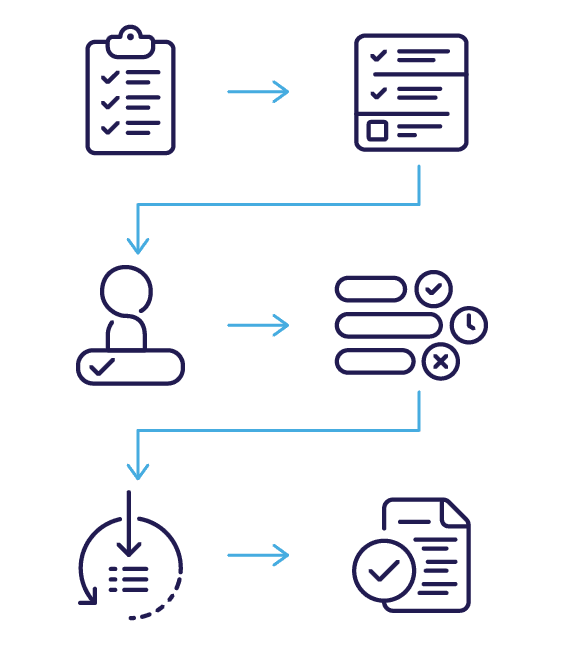
- Assign the Appropriate Checklist
Automatically or manually attach the correct checklist based on project type, deliverable or department. - Reviewers Complete Required Items
Each reviewer works through structured questions and compliance steps tailored to the asset. - Mandatory Items Must Be Confirmed
Approvers cannot sign off until all required fields and checks are completed. - Track Reviewer Progress in Real Time
Marketing and project owners can instantly see which checklist steps are complete or outstanding. - Responses Are Saved for Governance
All checklist answers feed directly into the project’s audit trail for full compliance visibility. - Approve With Confidence
Once all requirements are met, reviewers sign off knowing that no critical step has been missed.
Use Cases
Marketing Teams
Validate messaging, brand accuracy and required elements across all campaign assets.

Legal & Compliance Teams
Confirm regulated content meets industry requirements across finance, insurance, healthcare and government.

Creative Agencies
Ensure assets meet internal standards before sending to clients — reducing revisions and improving delivery speed.

Brand Governance Teams
Verify logo usage, tone of voice, mandatories, disclaimers and brand identity rules.

Challenges Approval Checklists Solve
Review Variability
Without structured checklists, reviewers apply different standards, creating inconsistent approvals, unnecessary revisions and unpredictable quality across campaigns, teams and agencies.
Compliance Omissions
Legal wording, required disclaimers, substantiation and regulatory statements are easily missed when teams rely on memory instead of a defined compliance checklist.
Brand Inconsistency
Incorrect logos, colours, formatting, mandatories and tone of voice slip through during manual reviews, weakening brand governance across channels and markets.
Subjective Decisions
Approvals depend on individual interpretation rather than defined criteria, increasing the risk of incorrect sign-off, missed requirements and compliance breaches.
Revision Overload
Issues missed in the first round cause needless revision cycles, slowing delivery, increasing workload for studios and delaying campaign timelines unnecessarily.
Approval Bottlenecks
Unclear review expectations cause delays, long wait times and stalled approvals — especially during peak campaign periods or high-volume creative production.
Weak Audit Evidence
Email-driven approvals provide no reliable proof that required checks were completed, making audits slower, riskier and harder to validate in regulated industries.
Risky Claims
Without structured validation steps, unapproved claims, unsubstantiated statements or incorrect information may accidentally reach market, increasing regulatory and reputational risk.
Fragmented Processes
Different teams, regions and agencies follow their own review methods, creating inconsistent governance, unclear responsibilities and uneven quality across large organisations.