
Marketing Calendar: A Clearer Way to See Every Campaign
Marketing teams juggle multiple campaigns, deadlines, creative deliverables and go-to-market dates across channels. Without a centralised view, it becomes difficult to understand what’s launching when, where teams are overloaded and how key milestones align.
Admation’s Marketing Calendar gives teams a single, real-time visual timeline of all upcoming and active projects. Whether you’re planning a national campaign, coordinating BAU activity or managing seasonal bursts, the calendar brings clarity to your entire workflow.
This feature is ideal for marketing teams, creative agencies, brand teams, in-house studios and operations managers who need visibility, alignment and better forward planning.
What Problem Does the Marketing Calendar Solve?
Marketing teams operate in complex environments with overlapping campaigns, competing deadlines and multiple project owners. Without a shared calendar, work becomes reactive, timelines slip and stakeholders lose visibility of what’s happening across the organisation.
The Marketing Calendar solves these issues by giving teams a clear, unified timeline of every project, milestone and delivery date — ensuring better planning, fewer surprises and smoother execution.
Without a structured marketing calendar, teams face:
- Limited visibility across campaigns
Key dates live in spreadsheets, emails or personal calendars, making it hard to understand timing, workload and priorities. - Schedule clashes and overloaded periods
Teams only notice timing conflicts after work has started — creating bottlenecks, rushed approvals and campaign delays. - Poor planning and prioritisation
Stakeholders cannot see dependencies, seasonal peaks or coordinated campaign cycles, making strategic planning difficult. - Reactive resourcing
Creative and marketing teams struggle to forecast workloads, identify heavy campaign periods or manage capacity. - Inconsistent communication
Different teams operate from separate calendars, causing misalignment across marketing, brand, digital, e-commerce, studio and product teams. - Missed or late milestones
Approval, creative, compliance or production dates slip because they are not visible in a shared timeline.
Admation’s Marketing Calendar brings all campaigns, deadlines and milestones into one shared view — helping teams plan proactively and execute campaigns with confidence.
What Is the Marketing Calendar Feature?
The Marketing Calendar provides a visual schedule of all campaigns, projects, tasks and milestones across an organisation. Users can switch between weekly, monthly, two-month or three-month views to plan workloads, track delivery dates and stay aligned.
Projects automatically populate the calendar as soon as dates are added — reducing administrative work and improving accuracy.

Key Features
Multiple Calendar Views
Switch between weekly, monthly, two-month and quarterly schedules to plan at both detailed and strategic levels.

Automatic Project Population
Projects appear instantly when dates are entered — eliminating manual updates and spreadsheet maintenance.

Advanced Filters for Teams & Campaign Types
Filter by brand, region, team, business unit, channel, or project category to focus on specific workstreams or planning cycles.

Milestone & Deadline Visibility
Track approval deadlines, delivery cut-offs, go-live dates and production stages in one shared timeline.

Colour-Coded Campaigns
Use colour labels to differentiate project categories, campaign types or workflow statuses at a glance.

Sync to Personal Calendars
Export milestones to Outlook, Apple Calendar or Google Calendar so individuals never miss critical dates.

Organisation-Wide Transparency
Give all departments access to the same live schedule — improving alignment and reducing duplicated planning.

PDF Export for Stakeholder Updates
Export calendar views for leadership reviews, agency updates or retail planning discussions.

Key Benefits
Full Visibility Across All Campaign Activity
Teams gain a single, consistent view of all marketing work — improving forecasting, decision-making and alignment.
Proactive Campaign Planning
Identify busy periods, seasonal peaks and approval bottlenecks early so risks can be mitigated before they escalate.
Smarter Resource Allocation
Understand when teams will be overloaded and adjust creative or delivery schedules early.
Reduced Timeline Conflicts
Avoid overlapping launches and unrealistic turnarounds caused by disconnected planning tools.
Stronger Cross-Team Alignment
Marketing, creative, brand, e-commerce, legal and product teams work from the same source of truth.
Less Administrative Work
Automatic population of projects removes the need for manual calendar updates and reduces spreadsheet reliance.
How It Works
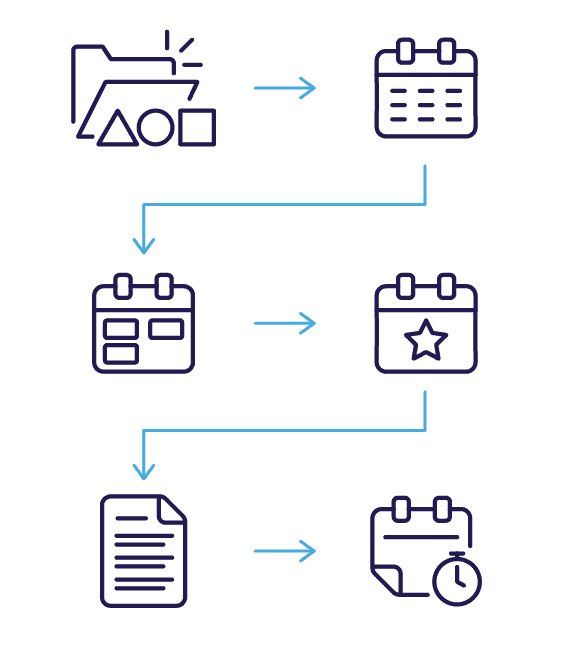
- Create a Project
Enter key dates such as brief deadlines, approval stages, production milestones or go-live timings. - View the Marketing Calendar
The project appears automatically in the weekly or monthly calendar view. - Filter Your View
Drill down by brand, team, project category, region or campaign type for focused planning. - Track Milestones
Monitor when briefs, approvals or deliverables are due across the entire portfolio. - Export or Sync Dates
Download the full calendar as a PDF or sync reminders to personal calendars. - Plan and Adjust Workload
Use the calendar to identify peak periods and adjust schedules before bottlenecks form.
Use Cases
Marketing Teams
Plan campaigns, align cross-channel activity and coordinate key delivery dates.

Creative Studios
Forecast workload, manage peak periods and allocate resources more effectively.

Retail & E-Commerce
Coordinate national promotions, weekly trade plans and seasonal bursts across channels.

Agencies
Gain visibility into client calendars and submit creative at the right time.
Legal & Compliance Teams
Track regulated content cycles and ensure compliance reviews occur at the right stage.

Challenges the Marketing Calendar Solves
Visibility Gaps
Teams lack a unified view of campaigns, deadlines and deliverables, making it difficult to plan effectively or understand what is launching across channels.
Schedule Conflicts
Without a shared calendar, overlapping deadlines, launch clashes and heavy workload periods appear too late — creating unnecessary pressure and delays.
Planning Blind Spots
Teams miss seasonal peaks, dependencies or cross-team impacts when dates are scattered across personal calendars or spreadsheets.
Reactive Resourcing
Creative and marketing teams cannot forecast workload, making it difficult to prepare for large campaign periods or avoid burnout.
Misaligned Teams
Different departments follow separate timelines, causing miscommunication between marketing, brand, digital, product and retail teams.
Slipping Milestones
Key approval deadlines or campaign milestones get missed because they’re not visible in one central timeline.
Inefficient Workflows
Manual updates, disconnected calendars and inconsistent communication make it difficult to manage high-volume campaign cycles.
Missed Dependencies
Critical cross-team dependencies — like compliance sign-off or production deadlines — become unclear without a structured, shared calendar.
High Admin Overhead
Teams waste hours updating spreadsheets, reconciling dates and communicating timelines that Admation could update automatically.